

Artificial intelligence platforms are rapidly becoming part of everyday business operations. From automating workflows and generating content to supporting software development and customer engagement, organizations are now evaluating which AI models can deliver practical business value.
Alibaba Qwen AI: What Businesses Need to Know About Alibaba Cloud’s Growing AI Model Ecosystem
One platform gaining more attention in the enterprise AI market is Alibaba Cloud Qwen AI. Developed by Alibaba Cloud, the Qwen family of large language models is expanding Alibaba’s position in the global AI and cloud ecosystem.
As businesses continue investing in digital transformation, platforms like Qwen AI are becoming increasingly relevant for companies looking to integrate AI into productivity, automation, analytics, and cloud-based workflows.
Understanding Alibaba Qwen AI
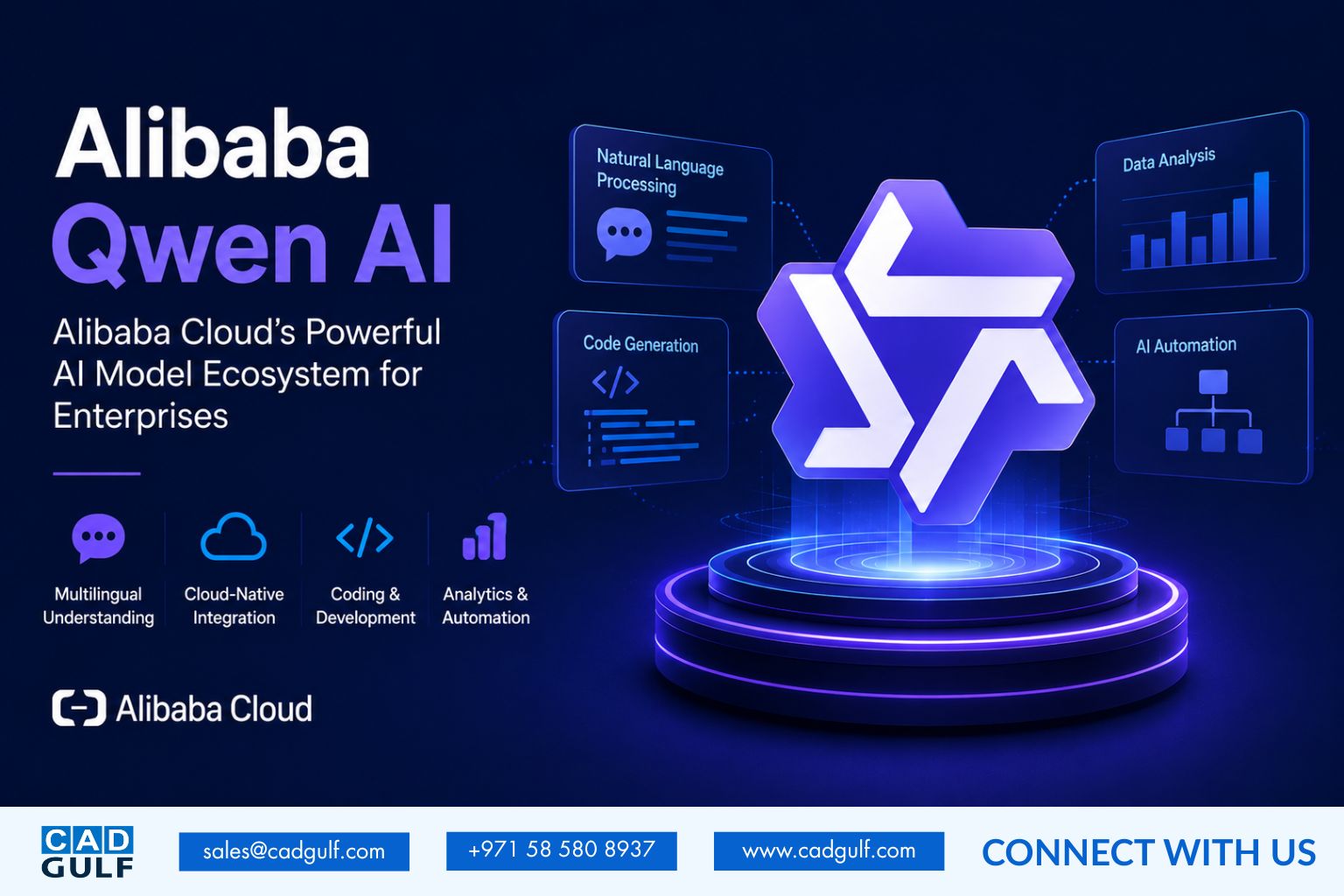
Qwen AI is a family of generative artificial intelligence models developed by Alibaba Cloud. These models are designed to handle a wide range of tasks, including:
- Natural language processing
- Content generation
- Coding assistance
- Data analysis
- AI-powered automation
- Multilingual communication
- Enterprise workflow support
The platform is part of Alibaba Cloud’s broader generative AI strategy, which focuses on integrating AI services into cloud infrastructure, enterprise applications, and digital business operations.
Qwen models are built similarly to other large language model ecosystems currently shaping the AI market. However, Alibaba has positioned Qwen with strong integration into cloud services, enterprise deployment options, and multilingual capabilities that can support global business environments.
Why Qwen AI Is Receiving Attention
The rapid growth of generative AI has created significant competition among global technology providers. Companies are now exploring alternatives beyond mainstream AI platforms to find solutions that match their infrastructure, compliance, and regional business requirements.
Qwen AI has gained attention for several reasons:
Multilingual AI Support
One of Qwen’s strengths is its ability to support multiple languages and cross-regional communication. This is increasingly important for international businesses managing operations across different markets.
Integration With Cloud Infrastructure
Since Qwen is part of Alibaba Cloud’s ecosystem, organizations can integrate AI workloads directly into their cloud environments. This helps businesses streamline deployment and manage AI applications more efficiently.
Enterprise-Focused AI Services
Alibaba Cloud has emphasized enterprise use cases rather than purely consumer-facing AI tools. This includes areas such as:
- Intelligent customer service
- Workflow automation
- AI-powered development tools
- Data processing
- Business analytics
- Smart collaboration systems
Open-Source and Model Expansion
Parts of the Qwen ecosystem have also been released through open-source initiatives, allowing developers and researchers to experiment with AI applications and customize solutions for specific business needs.
How Alibaba Qwen AI Works
Like many large language models, Qwen AI is trained using massive datasets that help the system understand patterns in language, coding, reasoning, and contextual communication.
The platform can process prompts and generate responses for tasks such as:
- Writing summaries
- Creating reports
- Generating marketing content
- Translating text
- Assisting with programming
- Analyzing documents
- Supporting AI chatbots
Businesses can deploy these capabilities through cloud-based environments and integrate them into existing digital platforms or applications.
The growing focus on AI agents and automated enterprise workflows may also increase the relevance of models like Qwen in the coming years.
The Expanding Role of Generative AI in Business
Generative AI is no longer limited to experimental projects. Organizations across industries are now integrating AI into daily operations to improve efficiency and reduce manual workloads.
Some of the most common enterprise applications include:
Productivity and Workflow Automation
AI models can automate repetitive tasks such as:
- Document creation
- Meeting summaries
- Email drafting
- Internal knowledge search
- Data categorization
This can help employees focus on higher-value strategic work.
Software Development Support
AI coding assistants are becoming increasingly common in development environments. Qwen AI’s coding capabilities may help developers accelerate software development, debugging, and documentation processes.
Customer Experience and Communication
Businesses are also using AI-powered systems to improve customer support through:
- AI chatbots
- Virtual assistants
- Faster ticket responses
- Personalized communication
Business Intelligence and Data Analysis
Generative AI tools are increasingly being connected with analytics platforms to simplify reporting and improve decision-making.
Industry Perspectives and Considerations
While generative AI continues to grow rapidly, many organizations are still evaluating how to adopt these technologies responsibly and effectively.
Industry experts often highlight several key considerations when implementing enterprise AI systems.
Data Privacy and Compliance
Businesses must ensure that AI platforms align with internal security policies and regional compliance requirements. Data governance remains a major discussion point for organizations deploying generative AI tools.
AI Accuracy and Reliability
Although AI systems can improve efficiency, generated responses still require human review in many business environments. Accuracy, hallucination risks, and contextual understanding continue to be important concerns.
Infrastructure and Scalability
Running AI workloads at scale requires strong cloud infrastructure, storage capacity, and compute resources. This is one reason why cloud providers are becoming central players in the AI ecosystem.
Workforce Adaptation
Companies are also focusing on how employees can work alongside AI tools effectively. Many organizations now see AI as a productivity enhancer rather than a direct replacement for human expertise.
Business Impact of Alibaba Qwen AI
The continued development of enterprise AI platforms like Qwen may influence several business and IT areas.
Cybersecurity and Risk Monitoring
AI-powered systems can help improve security operations through:
- Threat detection support
- Log analysis
- Incident summarization
- Automated monitoring workflows
However, businesses must also manage AI-related risks such as data leakage and unauthorized access.
Cloud Infrastructure Modernization
As AI adoption grows, organizations may need to modernize their cloud infrastructure to support larger workloads, AI integration, and scalable computing environments.
Digital Transformation Initiatives
Generative AI is increasingly becoming part of broader digital transformation strategies. Businesses are exploring how AI can improve operational efficiency across departments including HR, finance, sales, and customer support.
Collaboration and Knowledge Management
AI tools can help teams manage internal information more efficiently by improving document search, summarization, and collaboration across distributed workforces.
Automation and Operational Efficiency
Enterprise AI platforms are also helping organizations reduce manual processes and improve workflow speed through intelligent automation.
How Businesses Are Approaching AI Adoption
Many companies are now taking a phased approach to AI adoption rather than deploying large-scale AI systems immediately.
Typical strategies include:
- Starting with internal productivity tools
- Testing AI in customer support environments
- Implementing AI-powered analytics
- Exploring secure cloud AI deployments
- Evaluating governance and compliance frameworks
This gradual adoption approach helps organizations measure business value while managing operational risks.
Where CAD Gulf Fits Into the Conversation
As businesses evaluate cloud platforms, cybersecurity strategies, and enterprise AI technologies, companies often require guidance on infrastructure readiness, digital transformation planning, and secure deployment environments.
CAD Gulf LLC works with organizations across areas such as cloud solutions, IT infrastructure, cybersecurity, collaboration technologies, and enterprise software environments. As AI adoption continues to evolve, infrastructure planning and technology integration are becoming increasingly important for businesses exploring generative AI capabilities.
Rather than focusing only on AI tools themselves, many organizations are prioritizing the broader technology ecosystem required to support scalable and secure AI operations.
The Future of Enterprise AI Platforms
The enterprise AI market is expected to continue expanding as organizations look for ways to improve efficiency, automate operations, and enhance digital experiences.
Platforms like Qwen AI represent a broader shift toward AI-integrated cloud ecosystems where infrastructure, automation, analytics, and intelligent applications work together more closely.
At the same time, businesses will likely continue balancing innovation with practical considerations such as governance, compliance, cybersecurity, and long-term operational value.
As generative AI becomes more integrated into enterprise workflows, the focus may gradually move away from experimentation and toward sustainable, business-focused implementation strategies.